
Recommended Weekend Reads
What Next for Russian-Ukrainian Peace Talks? Russia’s Shadow War on Europe, The U.S.–Saudi Critical Mineral Deal, and the Great Reallocation in the U.S. Supply Chain Trade
November 28 -30, 2025
We hope you had a wonderful Thanksgiving holiday! Below are a number of reports and articles we read this past week and found particularly interesting. Hopefully, you will find them interesting and useful as well. Have a great weekend.
The Ukraine Peace Negotiations
Is there any peace deal that Putin would accept? Vox
In recent weeks, President Trump has offered a 28-point peace plan, which is now a 19-point peace plan. Hard bargaining is going on between the US, Ukraine, and the EU. But at this point, nobody seems to have any leverage over Russian President Vladimir Putin. Which is why the question of whether this war will end soon comes down to what terms Putin finds acceptable. This raises the depressing question of whether peace is possible at all as long as Putin is alive and in power.
A Ukraine Plan that Would Actually Work Hal Brands/Bloomberg Opinion
President Donald Trump’s new peace ploy in Ukraine will likely fail. He has a chance, in the coming months, to craft an approach that might succeed. Real peacemaking could be possible in 2026, because the strains on Russian leader Vladimir Putin’s economy and army are getting worse. But policymakers in the US, the European Union and Ukraine will have to overcome their own hesitations and weaknesses — or Putin will still be able to settle this war on his terms. But if this round of peacekeeping proves abortive, the next one could go better — if Ukraine and its supporters properly prepare. Putin seems confident that Russia is on the road to victory. Yet his position is weaker than it seems.
This Might be the best Ukraine can Hope For Jamie Dettmer/Politico EU
As it stands, there is scant grounds for optimism that, for all its heroism, Ukraine can turn things around. The country is unlikely to emerge from its most perilous winter of the war in a stronger position, better able to withstand what’s being foisted upon it. In fact, it could be in a much weaker state — on the battlefield, the home front, and in terms of its internal politics. Indeed, as it tries to navigate its way through America’s divisive “peace plan,” this might be the best Ukraine can hope for — or at least some variation that doesn’t entail withdrawing from the territory in eastern Ukraine it has managed to retain.
War Without End: Russia’s Shadow Warfare Center for European Policy Analysis
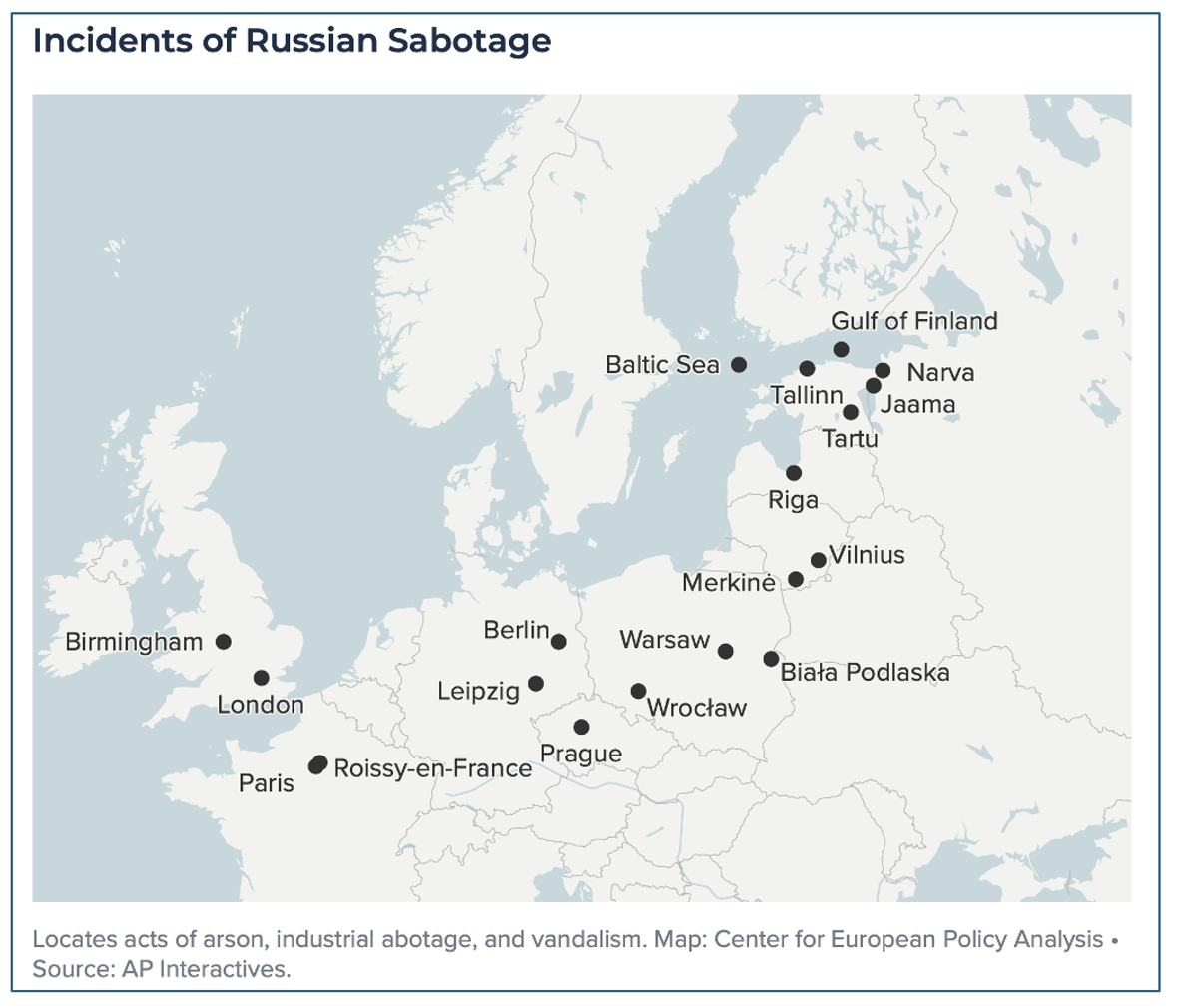
Even as Ukraine continues to suffer under wave after wave of bombardment and an ever-deepening occupation, Europe as a whole is under a sustained assault from Russia of a different kind. This report explains the who, what, why, and how of Russian shadow warfare, uncovering the nature of the forces Russia brings to bear against Europe itself, their governance structures, and, critically, the implicit doctrine that shapes strategic and tactical decision-making. This analysis shows that Russia’s shadow warfare is not simply a covert strategy, developed to take advantage of Western soft spots or fecklessness. Rather, it is the reflection of a deeper ideological and institutional logic, a neo-Stalinist threat framework that sees warfare as continuous and ubiquitous, that fuses domestic and foreign threats, and that understands everything and everyone as a potential target. This is an approach to warfare that generates escalation not by mistake, but by design. Unless Europe can impose discipline on the Russian shadow-warfare machine through clear deterrence, the likelihood of full-scale war between Russia and NATO will only increase.
The Americas
Russian Disinformation Comes to Mexico, Seeking to Rupture U.S. Ties The New York Times
Russia’s disinformation efforts across Latin America have intensified over the last two years, partly aimed at sowing discord between the United States and its allies in the region, according to an American diplomatic cable and new report by watchdog groups. The campaign is spearheaded by Kremlin-owned media outlets like Sputnik and RT, officials say, describing an effort to stoke anti-American sentiment, especially in Mexico, the world’s largest Spanish-speaking nation and Washington’s biggest trade partner.
With the USS Gerald R. Ford, the world’s largest aircraft carrier, positioned in the Atlantic, and Puerto Rico militarized with at least 5,000 of the nearly 15,000 troops mobilized for the operation, the specter of the Cold War — this time against drugs — seems to have resurfaced in the region, and Havana is beginning to worry. If Venezuela falls, Cuba would lose its most important point of reference in the Southern Cone at a time when Latin American democracies, with their electoral volatility, are transitioning from progressive governments — which could be potential allies — to right-wing governments. More than an economic loss, Cuba would lose an ideological and symbolic ally.
The Latest on the Global Race for Critical Minerals
What’s in the New U.S.–Saudi Minerals Agreement? Center for Strategic and International Studies
The visit by Saudi Crown Prince Mohammed bin Salman to Washington, D.C., marks a high-profile moment in the strategic partnership between the United States and Saudi Arabia. The visit represents a major step forward in the bilateral minerals’ relationship. The two countries established a Strategic Framework for Cooperation on securing uranium, metals, permanent magnets, and critical mineral supply chains, which is designed to facilitate two-way investment in this vital sector and serve as a "cornerstone" of the bilateral strategic partnership. Additionally, the U.S. Department of Defense (recently renamed the Department of War) also announced that it will finance a 49 percent equity stake in a new rare earths refinery in Saudi Arabia. Given the kingdom’s substantial reserves of heavy rare earth elements, this partnership between the Department of War, Maaden, and MP Materials will play a critical role in reducing dependence on China, particularly following a year of pronounced volatility in global access to heavy rare earths.
The Global South and China’s Mineral Power Jesse Marks/Rihla Research & Advocacy LLC
Abstract: This paper examines how Chinese scholars and policymakers interpret the accelerating contest over critical minerals and what it reveals about Beijing’s evolving approach to supply-chain power in the Global South. It shows how China increasingly views minerals as strategic assets foundational to national strength and industrial autonomy. Chinese analysts frame resource security as an integrated system that blends state-backed finance, diplomacy, and co-development with host countries to secure and diversify supply, while mitigating external pressure from U.S.- and EU-led “de-Sinicization” strategies. At the same time, they acknowledge China’s own vulnerabilities, defined as heavy import dependence, exposure to political risk in resource-rich states, and a global shift toward resource sovereignty that raises the bar for local processing, technology transfer, and joint ventures. The result is a more contested, politically charged mineral landscape in which Beijing seeks both secure access to mineral resources, as well as a more concerted effort to shape the rules, governance models, and industrial pathways of the next generation of mineral economies.

Geoeconomics
What Is a Tariff Shock? Insights from 150 years of Tariff Policy Regis Barnichon/Aayush Singh/Federal Reserve Bank of San Francisco
Widely touted by the White House, this paper looks at 150 years of tariff policy in the US and the estimates it has on macro aggregates. Starting in 1870, the study shows that a tariff hike raises unemployment (lowers economic activity) and lowers inflation. Using only tariff changes driven by long-run considerations—a traditional narrative identification—gives similar results. We also obtain similar results if we restrict the sample to the modern post-World War II period or if we use independent variation from other countries (France and the UK). These findings point towards tariff shocks acting through an aggregate demand channel.
Analyzing Japan’s $550 Billion Pledge to Invest in the U.S. Federal Reserve Bank of St. Louis
In July 2025, the United States and Japan reached a major trade agreement that includes Japan’s pledge to invest $550 billion in U.S. industries in return for lower tariffs on Japanese imports. The details of this investment pledge became clearer on Sept. 4, when U.S. Secretary of Commerce Howard Lutnick and Ryosei Akazawa, then Japan’s top trade negotiator, signed a memorandum of understanding (MOU). In practice, this structure makes Japan’s commitment resemble a loan rather than an equity investment, since Japan does not become a shareholder in the projects. The interest rate of this “loan” is called “deemed interest rate,” which is based on a benchmark rate plus a spread that depends on the project’s risk profile. Once the principal and accrued interest are fully repaid, Japan begins receiving returns through its 10% profit share. Nevertheless, it remains unclear what would happen if Japan were unable to fully recoup its deemed allocation amount. In that case, the “loan” would likely become unrecoverable, and Japan would have to write it off.
An Anatomy of the Great Reallocation in US Supply Chain Trade Laura Alfaro and Davin Chor National Bureau of Economic Research
Since 2017, China has experienced a large and persistent decline in its share of the US import market. The main gainers have been Vietnam, Mexico, and (more recently) Taiwan. It is well-documented that China’s share in US direct imports fell from around 21% in 2017 to 16% in 2022. Figure 3 reveals a further drop in the US import market share held by China to around 13% by 2024. The decoupling that started under the first Trump administration thus extended through to the end of the Biden presidency, rather than undergoing any reversal. Figure 3 further hints at how these large shifts in the sources of US imports have persisted post-Liberation Day. By July 2025, China’s share in US direct imports had fallen by another 4pp relative to 2024, declining from 13% to roughly 9%. To put this in perspective, China’s share in total US imports stood at approximately 9% in 2001, in its accession year to the WTO. This climbed steadily over the next 16 years, peaking at 22% in 2017. The drop back to a 9% import share by mid-2025 thus represents a remarkable unwinding, in just half the time it took this share to reach its pre-trade war peak.
The Predictability of Global Monetary Policy Surprises Federal Reserve Bank of Boston Research Working Paper
Surprise changes to short-term interest rates around central bank announcements—commonly termed “monetary policy surprises”—have been shown to be predictable using information available before the announcements. This is notable given the profit opportunity this predictability presents in such an important market. This paper investigates the predictability of monetary policy surprises in an international context. The author constructs a data set with monetary policy surprises across nine central banks—covering Australia, Canada, the euro zone, New Zealand, Norway, Sweden, Switzerland, the United Kingdom, and the United States—and around 2,000 announcements.