Recommended Weekend Reads
The Rise and Risks of Quantum Computing, China’s Grip on the Iron Ore Market and Impact on the US Navy, the Shareholder State, and Russia’s and Iran’s Growing Hybrid Attacks on the US and Europe
August 28 - 30, 2026
Below are several reports and articles we read this past week and found particularly interesting. Hopefully, you will find them of interest and useful as well. Have a great weekend.
The Quantum Computing Revolution: Opportunities and Risks
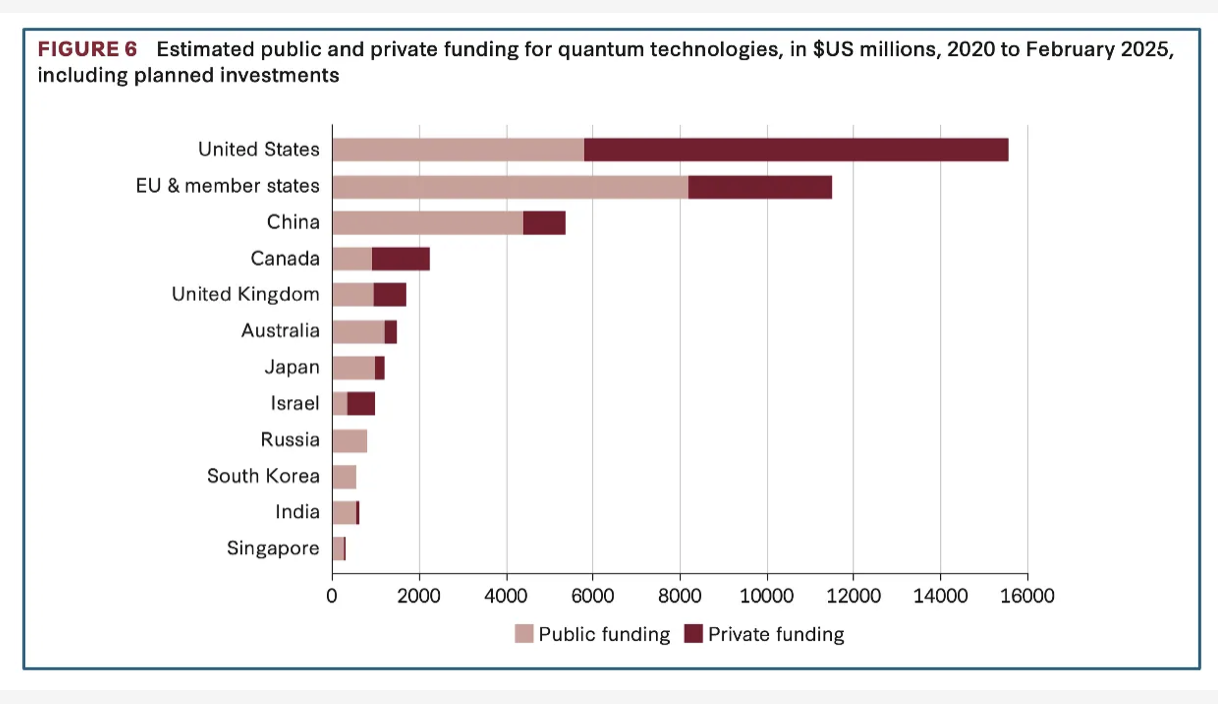
The Quantum Revolution: A Guide for Allied Policymakers Hoover Institution Press
The Hoover Institution at Stanford University recently published this report on the fast-moving changes to quantum technologies. Quantum technologies are moving from the laboratory toward strategic relevance but at varying paces and with different implications for allied security. This report offers nontechnical policymakers in allied countries a comprehensive guide to quantum computing, sensing, and communications: each technology's status, China’s competitive strategy, and why no single nation can control the tech stack. It argues that US leadership in the quantum era hinges on orchestrating resilient alliance networks.
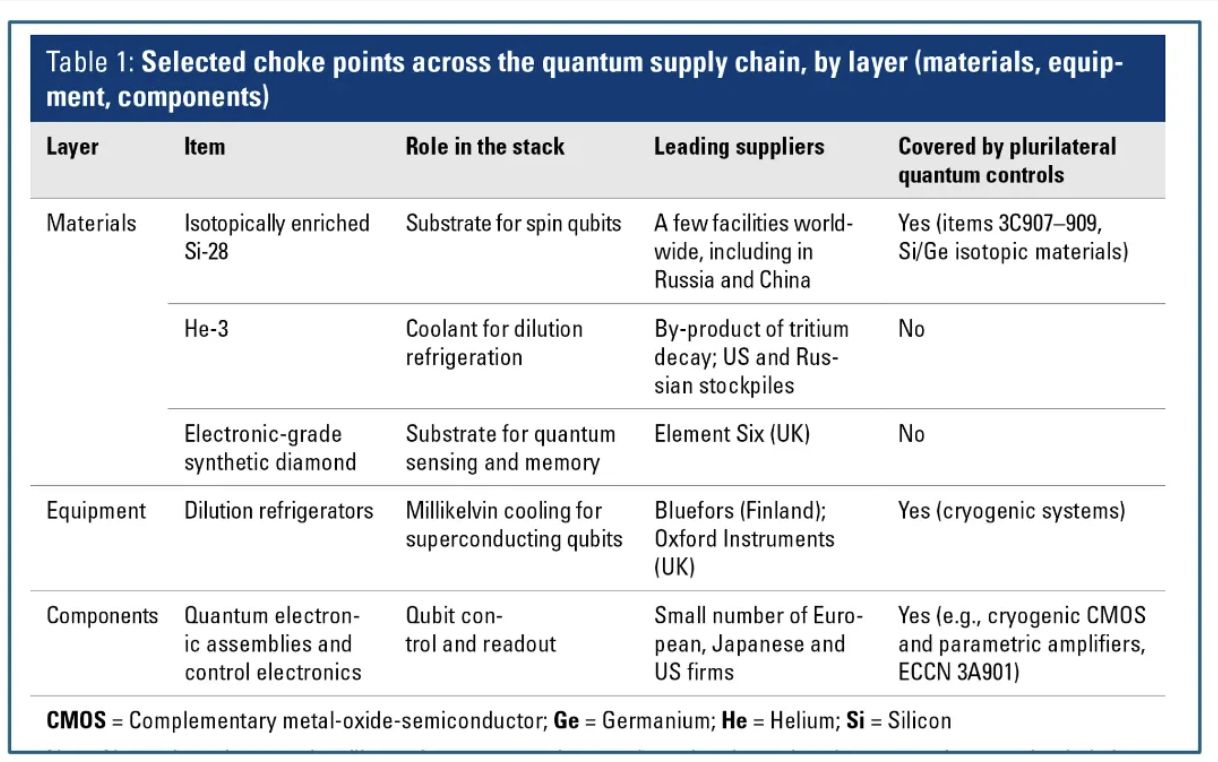
Securing the quantum stack: export controls, choke points and strategic competition International Institute for Strategic Studies
The US and its allies have built aligned export controls on quantum technology, targeting supply-chain choke points before the industry matures. Their success will depend not only on denying rivals access, but also on sustaining the allied ecosystem. Quantum computing illustrates how export controls on emerging technologies face fundamentally different challenges than those applied to mature industries. The central challenge is balancing two competing objectives: preventing military exploitation by strategic rivals while also avoiding restrictions that would unnecessarily impede scientific research, commercialization, and innovation.
The Fight for Critical Minerals and Access to Iron Ore, US Government Equity Stakes, and the New Geography of Energy Security
The Shareholder State: Washington's Improvised Bet on Critical Minerals Heidi Crebo-Rediker/Council on Foreign Relations
China’s weaponization of its dominance over critical minerals, rare earths, and permanent magnets has forced the United States to abandon the fiction that markets alone will deliver secure supply chains. Beijing controls most of the processing, separation, refining, and magnet-making capabilities that stand between a mineral in the ground and its use in an aircraft, missile, car, robot, phone, semiconductor, or magnetic resonance imaging (MRI) machine. Since 2010, when China first weaponized Japan’s access to critical minerals over a maritime dispute, It has shown a willingness to restrict exports of strategic materials and technologies when doing so serves its geopolitical interests. As a result, the author argues, the United States needs to use equity strategically, as part of a broader architecture designed to build commercially sustainable supply chains that serve national security interests while keeping markets free but not defenseless.
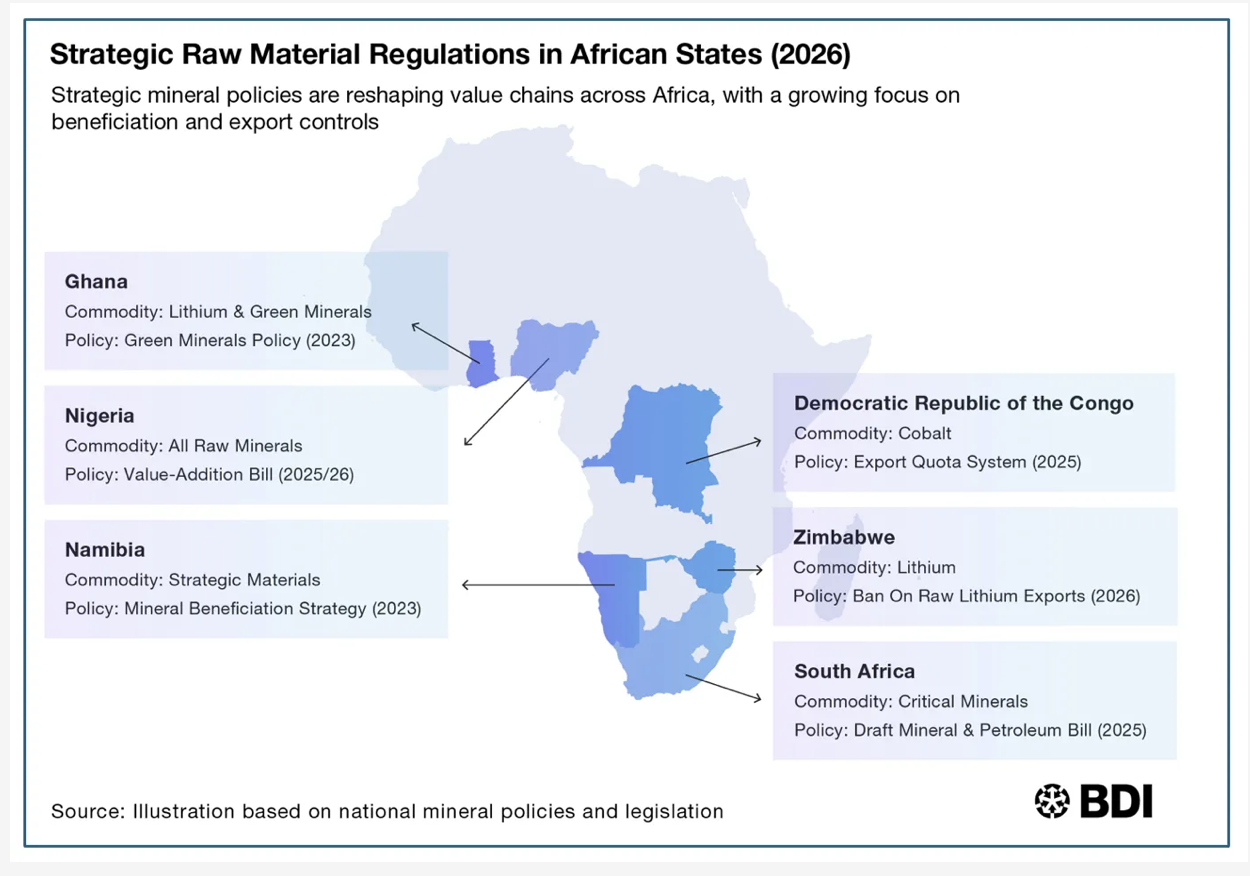
Critical minerals will reshape European-African relations ISS/Africa Futures.
Its search for critical minerals is leading Europe to turn its attention more strongly towards Africa: the continent is home to approximately 30% of the reserves of critical raw materials, including strategically important resources such as copper, cobalt, platinum group metals, manganese, bauxite and lithium. At the same time, African countries rich in raw materials are implementing industrial policy measures, such as export restrictions on unprocessed minerals and local-content requirements, to gain a larger domestic share of the value added. Rather than relying on raw commodity exports, governments[TM1] seek to increase fiscal revenues, strengthen foreign-exchange earnings, generate skilled employment and foster industrial diversification through downstream activities such as refining, smelting, battery component production and manufacturing. Importantly, China poses a major economic risk to [TM2] Germany. In 2024, BDI and Roland Berger calculated that the macroeconomic costs to Germany in the event of a Chinese export ban on lithium and lithium-containing products would amount to 115 billion euros; thus, not diversifying will eventually be the more expensive scenario. Like other countries such as Japan and, more recently, the US, the EU and its member states have adapted their raw materials-related policies and instruments (like the CRMA or the German Raw Materials Fund) to invest in mining, processing, and recycling capacity, as well as innovation, to support and de-risk companies’ diversification efforts.
Why China’s Grip on Iron Ore Is a Warning for the US Navy Peter Pham/National Interest
Speaking several weeks ago at a roundtable of the American mining industry convened in Washington, President Donald Trump proclaimed that “critical minerals are the raw materials of American strength and power” and announced some $2 billion of investments in critical minerals-related projects as well as $180 million to bolster training of a qualified workforce. Almost all of the former was aimed at securing supply chains for rare earth elements (REEs) and other strategic materials needed for defense and other vital industries. This included the $400 million conditional loan commitment from the Department of Defense’s Office of Strategic Capital to Australia’s Sunrise Energy Metals to develop the full value chain (with first-offer rights going to the United States) for metals used in the aerospace and defense sectors.
As welcome as this development is, rare earths are hardly the sole material where a foreign competitor’s dominance presents a challenge. However, China just demonstrated once again how much power it now wields over global markets for critical minerals—and not just by its dominance of processing and consequent“chokepoint” power via export controls to turn supply pipelines on or off. In 2022, Beijing created the China Mineral Resources Group (CMRG) to consolidate its buying power, giving it enormous leverage over global demand for iron ore, Earth’s most traded dry physical bulk commodity. For seven months, CMRG effectively shut a major product from BHP, the free world’s largest mining company by capitalization, out of the market until in late April the Australian company agreed to price much of that ore in Chinese yuan through an index Beijing created, instead of the US dollar-based benchmark that has anchored the trade up to now.
From Hormuz to the Caucasus: The New Geography of Energy Security War on the Rocks
Every crisis in the Middle East returns the world’s attention to the same stretch of water. When tankers are seized, or missiles fly near the Persian Gulf, oil prices move, insurers reprice risk, shipping reroutes, and the United States repositions naval and airpower to keep the Strait of Hormuz open. The reflex is sound, because the strait carries volumes nothing else can. Alongside the maritime map, a second geography of energy security is taking shape: the pipelines, railways, power lines, and transit corridors linking the Caspian Basin and the South Caucasus to Europe. Western governments are pairing forward military presence in the Persian Gulf with a slower effort to diversify the routes by which energy and trade reach markets. The two efforts are being pursued separately, by different parts of government and on different timelines. They may not form a single strategy, but together these reduce the leverage any single chokepoint, supplier, or armed actor can exert over the system.
Russia’s and Iran’s Hybrid Warfare on the US and Europe
Russian Hybrid Warfare Activities in Europe: Considerations for Congress Congressional Research Service
Since the start of Russia’s full-scale invasion of Ukraine in 2022, US, European, and NATO officials have highlighted the continued threat Russia poses to European security. Observers and European officials have expressed concern regarding the rise of Russian hybrid warfare activities. In an October 2025 speech, European Commission President Ursula von der Leyen stated, “It is a coherent and escalating campaign to unsettle our citizens, test our resolve, divide our Union, and weaken our support for Ukraine. And it is time to call it by its name. This is hybrid warfare, and we have to take it very seriously.” Hybrid warfare activities attributed to Russia by US and European officials and observers have included acts of sabotage, assassinations, airspace violations, global positioning system (GPS) jamming, the severing or damaging of critical underwater infrastructure (CUI), cyberattacks, weaponized migration, and political and election interference. According to one study, the number of Russian hybrid attacks in Europe quadrupled from 2023 to 2024; another investigation compiled at least 151incidents of reported Russian operations from February 2022 to March 2026.
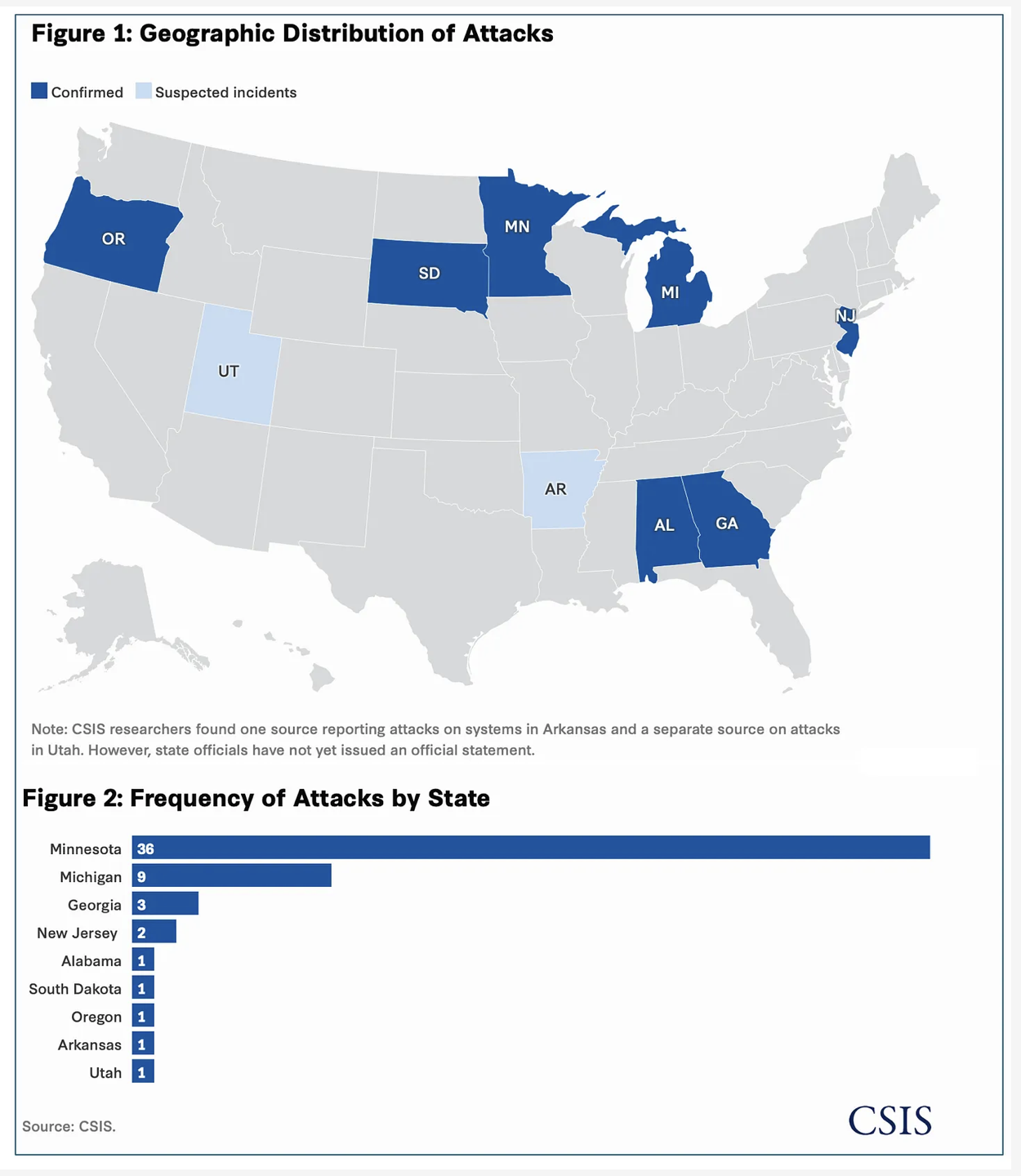
Mapping Iranian Cyberattacks on US Water Systems Center for Strategic and International Studies
In late July, Minnesota authorities disclosed that a coordinated cyberattack had targeted more than 30 municipal water systems across the state. The following weeks saw additional revelations in other states. Officials are beginning to understand the scope of what is likely an Iranian cyber campaign months in the making. Although the US government has not publicly attributed the attacks, an Iranian actor linked to the Islamic Revolutionary Guard Corps (IRGC) known as the CyberAv3ngers has claimed responsibility, stating their intention was to “warn America to back down.”The following set of charts brings together existing press reporting and CSIS expert analysis to provide a picture of what is known about the cyberattacks on the US water sector so far. It is important to acknowledge that the reporting is thus far incomplete; the current understanding of the scope and scale of the attacks is reliant on states self-reporting incidents as they search their technical logs from recent weeks, and reporting requirements are inconsistent at best.