

Recommended Weekend Reads
Russia’s Challenging Homefront, China’s External Challenges, The Labor Market Impacts of GLP’s, and How Markets Are Looking to New Places (including oceans) for Critical Minerals
July 24 - 26, 2026
Below are a number of reports and articles we read this past week and found particularly interesting. Hopefully, you will find them of interest and useful as well. Have a great weekend.
What is Happening Inside Russia?
The Burden of Return: Russia’s Veterans, Regional Strain, and the Politics of Reintegration Delphi Global
The scale of the challenge of veteran reintegration in Russia is already outpacing state capacity, with just a fragment of war participants having returned and demobilized. The Prosecutor General publicly berated the government for lagging in the employment and registration of returning soldiers. At the same time, independent reporting confirms widespread stigmatization of veterans in broader society and a lack of service delivery. The Kremlin’s political priority is ensuring the political loyalty of returning soldiers and preventing them from turning into a political force, not improving service delivery. The costs of wider reintegration are being systematically shifted onto regional budgets and, ultimately, the private sector at precisely the moment both are under acute fiscal stress. The resulting squeeze means that the sustained, diffuse costs of veteran healthcare, disability support, and employment - which fall disproportionately on subnational governments and employers - will act as a structural drag on Russia’s public finances and private sector for years to come. According to a February 2025 analysis of the International Institute of Strategic Studies, by the end of 2024 the number of severely wounded service members was already 376,000, with around half of them having lost limbs.
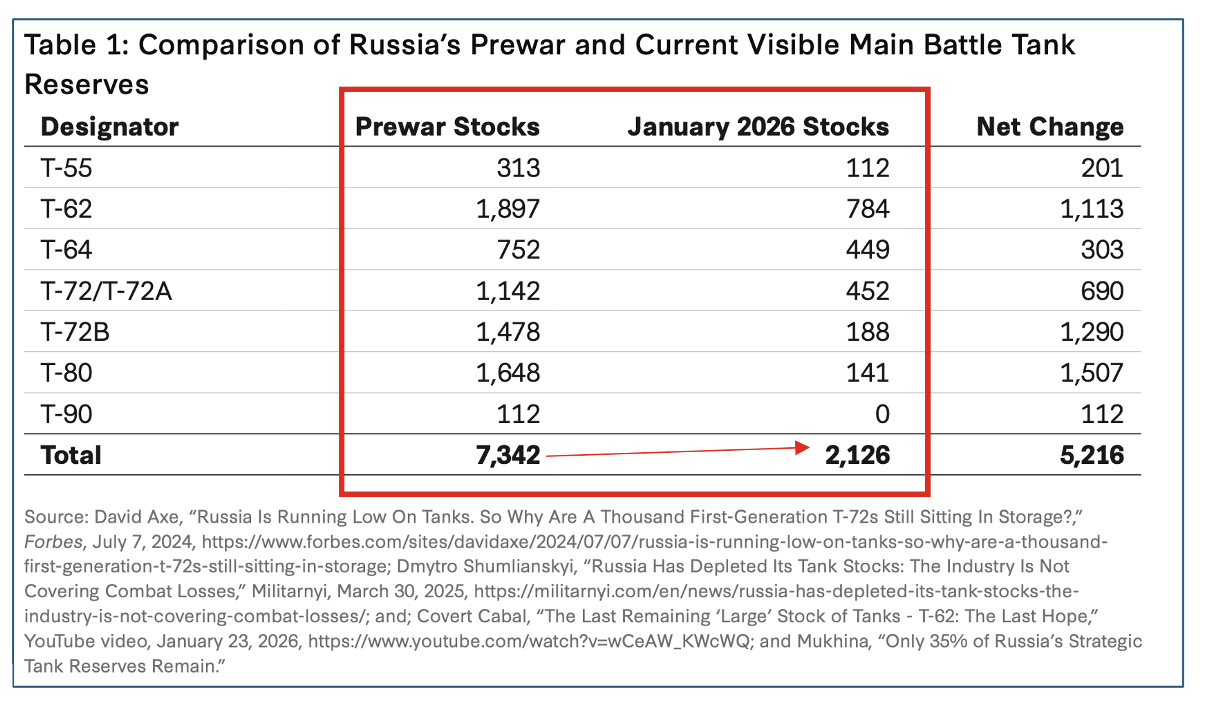
Rebuilding to Reconquer: Can Russia’s Defense Firms Deliver? Center for Strategic and International Studies
By some estimates, the scale of state-backed corporate borrowing in Russia is estimated to have ballooned to over $446 billion, with much of that money directly and indirectly supporting Russia’s war effort in Ukraine. Overall, in the post-2022 period, Russia has expanded domestic arms production to replace battlefield losses and meet future demand, with defense enterprises at the center of this effort. This report offers the first in-depth examination of five Russian defense firms that cover a broad cross-section of Russia’s defense sector: four major, well-established defense enterprises—Uralvagonzavod, Almaz-Antey, KRET, and Kalashnikov—and a new defense player, Ushkuynik. Together, these firms play central roles in the design, production, scaling, and supply of key systems—tanks and other armored vehicles (Uralvagonzavod), air defense systems (Almaz-Antey), electronic warfare (KRET), artillery and precision weapons (Kalashnikov), and drones (Ushkuynik). The report analyzes the internal and external factors shaping their production dynamics—including historical background and organizational structure, scale of production both before and after the full-scale invasion, revenue and procurement patterns (where possible), labor constraints, and evolving networks of foreign suppliers—and assesses what these trends imply for Russia’s ability to meet current wartime and future reconstitution goals.
China’s External Challenges
The Gulf’s China Problem Foreign Affairs
The war in Iran has unsettled the Gulf. Arab states are increasingly frustrated with the United States, which, after launching a war that wreaked havoc on global energy markets, failed to keep them safe from Iranian strikes. But the war is also forcing these countries to reassess their relationship with China. Beijing’s wait-and-see approach to the war and unwillingness to use its leverage over Tehran to contain the conflict have disabused Gulf Arab states of any lingering expectation that China could become an important security partner in the foreseeable future.
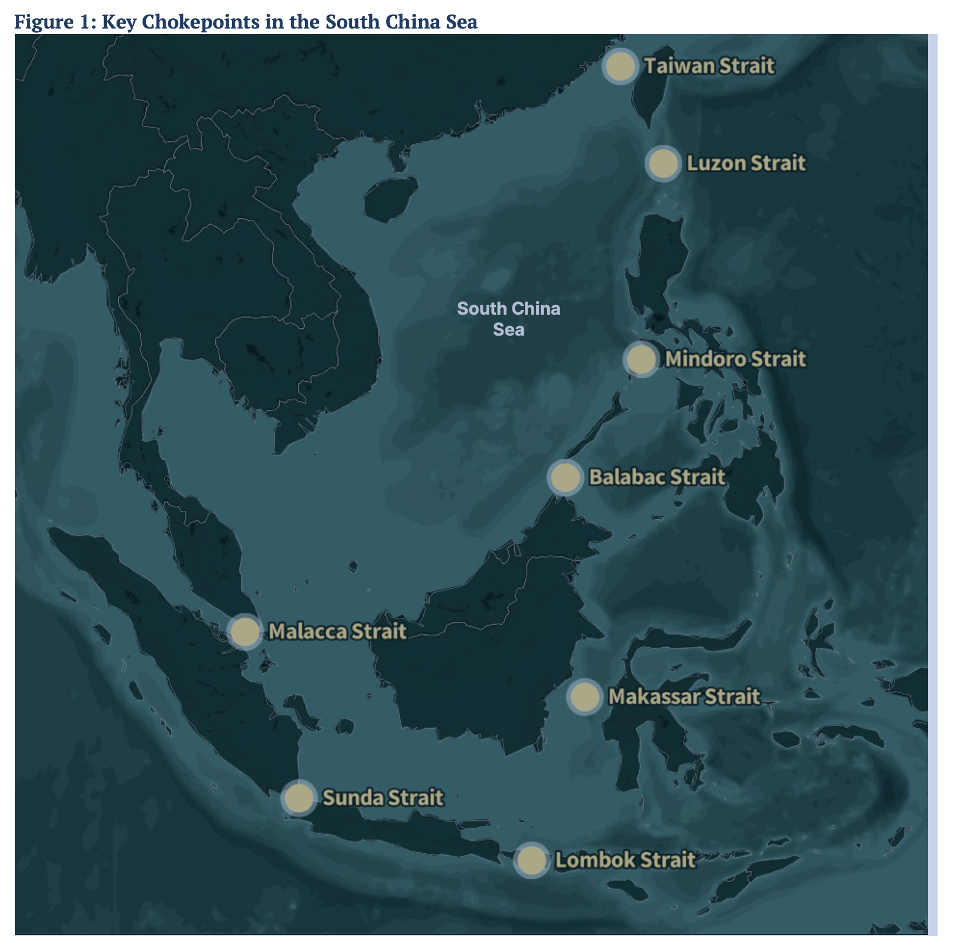
Troubled Straits: Analyzing Trade Chokepoints in the South China Sea Center for Strategic and International Studies
Each year, trillions of dollars of goods flow through the South China Sea, making it the world’s most consequential maritime corridor. The region is also a hotbed of geopolitical tensions that threaten to upturn global commerce. Despite the enormous stakes, the sea’s critical chokepoints have been poorly understood—until now. This CSIS brief and its companion interactive dashboard offer groundbreaking insight into the value and types of goods transiting eight different South China Sea chokepoints. The new data reveals the extent of each country’s reliance on each chokepoint and challenges existing notions about the importance of these chokepoints.
The Second China Shock - How This Time Is Different Brad Setser/Markus Academy Podcast
Brad Setser, a Senior Fellow at the Council on Foreign Relations and a former senior US Treasury and US Trade Representative, joined Markus’ Academy for a two-part conversation on the Second China Shock and the Second Coming of Global Imbalances. We will share the second part with implications for Europe tomorrow. Setser’s slides are available here. A summary in three bullets:
Concentration and bifurcation: compared to the imbalances of the 2000s or 2010s, today surpluses are concentrated in East Asia, China above all. China’s economy is now bifurcated: exports surge while domestic demand stalls, and due to import substitution policies domestic demand has decoupled from imports;
The financial flows have reversed: the pre-GFC’s safe-asset scarcity has ended. Reserve accumulation has stalled, and surpluses are no longer recycled into Treasuries;
The mismeasurement of China’s investment income account understates its true surplus, lifting the yuan’s implied undervaluation to ~30%, versus the ~19% implied by the officially-reported surplus (the IMF’s own estimate of undervaluation is smaller still).
Malign Alignment: How China, Russia, Iran, and North Korea (CRINK) Threaten the US and Our Allies George W. Bush Presidential Center
China, Russia, Iran, and North Korea, known together as CRINK, threaten democratic institutions, global security, mineral supply chains, and human rights by challenging the credibility of U.S. leadership. This report breaks down the four major challenges posed by the CRINK alliance and argues the US and its allies can counter their efforts by collective innovation, emerging military technologies, and strategic policy shifts.
More on the Impact of GLP’s on Society and Markets
The Labor Market Impacts of GLP-1s N. Meltem Daysal, Camille Fredrickson, Ida Kristiansen, Mircea Trandafir, et al. National Bureau of Economic Research
Abstract: We estimate the causal impacts of GLP-1 treatment on labor market outcomes using linked Danish administrative data and a matched stacked difference-in-differences design. We compare patients who initiate GLP-1 treatment during the first two years of Semaglutide availability to observably similar patients who initiate four years later. We find that GLP-1 treatment reduces long-term sickness leave by 17.3%. We estimate total fiscal benefits of GLP-1 initiation of approximately 1.3–1.5% of annual labor income per employed individual. We do not detect statistically significant or economically meaningful impacts on income, labor force participation, or employment over four years.
Latin America’s Growing Space Capabilities
The Space Race Comes to Latin America Americas Quarterly
Why would Ecuador - specifically the area of Guayaquil of all places - be a focus in Latin America’s new space race? Well, the answer is in the country’s name. The Guayaquil area is strategic for a different reason: It sits just two degrees south of the imaginary line dividing the world into two hemispheres. The planet rotates at its maximum speed at the equator—1,040 miles (1,670 kilometers) per hour—making it more efficient to launch rockets from these latitudes. Thanks to the rotational boost, less fuel is needed to reach orbital velocity, which in turn means rockets can carry more payload at a lower cost. Compared to many other countries that sit directly on the equator—a list that includes Congo, Somalia, Uganda and Indonesia, as well as Colombia and Brazil—Ecuador, with its dollarized economy and business-friendly government, looks attractive despite its security challenges
Latin America Has a Space Agency. Now Comes the Hard Part Americas Society
The Latin American and Caribbean Space Agency (ALCE) held its first general assembly in Mexico in February, marking the transition of a five-year-old diplomatic ambition into an operational institution. Of the 18 countries that signed the agency’s founding convention in 2021, only 11 ratified it. The challenge ahead is making it matter.
Brazil’s Landmark Satellite Program Americas Quarterly
Amazônia-1, the first satellite entirely designed and operated by Brazil, is part of a larger mission. The country plans to put two new units into orbit as part of a mission to observe and monitor deforestation in the Amazon, natural resources, and agricultural areas.
Critical Minerals
Is vanadium the future of critical minerals? Kazakhstan hopes so Javier Piedra/Asia Times
Vanadium is viewed as a critical mineral by the United States, the European Union, Russia, China and many other countries because of its importance to energy storage and industrial alloys. Of the critical metals that will define the next half-century, vanadium has perhaps the strongest claim to indispensability: it hardens the steel in our infrastructure and defense systems, and it stores the energy that our grids will increasingly depend on. Yet the market has consistently failed to price that future in, and nowhere is that mispricing more visible than in the vanadium deposits of Kazakhstan.
Seawater holds enough lithium and magnesium for the next 50,000 years, scientists say Interesting Engineering News
Researchers in the US have begun developing seawater mining technologies after estimating that just 0.1 percent of seawater has enough critical minerals to supply humanity for the next 50,000 years. Scientists at the Pacific Northwest National Laboratory (PNNL) believe the world’s oceans contain one of the greatest untapped reserves of critical minerals. These include lithium, magnesium, manganese, cobalt and rare earth elements that are essential for electronics and clean energy.
Critical Minerals: Why Rare Earths Now Shape Defense Power Abby Lilly/Foresight (The Tawazun Council for Defense Enablement – UAE)
The strategic landscape of defense has shifted dramatically. Where once our supply chain focus centered on optimizing logistics, trimming costs and meeting predictable lead times, today it is inseparable from national security. The raw materials that enable the most advanced weapon systems, such as rare earth elements, gallium, germanium, tungsten, indium, and a growing list of specialty metals, have moved from obscure commodities to the very building blocks of modern military supremacy. Critical minerals are now a strategic constraint on readiness.
· Mining the deep ocean Natasha Gilbert/Knowable Magazine
More than 13,000 feet below the surface of the Pacific Ocean, a more-than-70- ton machine trundled like a tank on its caterpillar tracks for a tenth of a mile — sucking up potato-sized nodules of rock packed with copper, manganese, cobalt and nickel. It was 2022, and that pilot run of a subsea harvester by a Canadian business, The Metals Company, was pronounced a success. The company is working to get a green light to deploy similar machines for commercial harvesting over an area of 65,000 square kilometers, to extract over 600 million metric tons of nodules. There are riches on the ocean floor — round deposits made up of tightly packed layers of critical minerals that have long been out of reach. But not anymore. The pursuits of The Metals Company are among 31 initiatives by companies, governments and state-owned enterprises — including China, India and the Republic of Nauru, a tiny island nation in the southwestern Pacific Ocean — to collect nodules for analysis and to test mining equipment.
The Faults of Long-Term Thinking on Critical Minerals Critical Supply Substack
The debate over critical minerals is presenting long-term policies that do not alleviate the immediate concerns with this supply chain. As these goods continue to be weaponized by the People’s Republic of China, lawmakers should be thinking of short-term solutions too. Plus, China’s latest AI model is casting doubt on Western leadership — are those concerns justified? Lastly, experts explain the latest political developments in Ukraine.