Recommended Weekend Reads
The Iran War: What to Expect and Can There Be Change? Challenges to China’s Economy, The Coming US-Cuba Showdown, and America’s Great Happiness Compression
March 6 - 8, 2026
Below are a number of reports and articles we read this past week and found particularly interesting. Hopefully, you will find them both interesting and useful. Have a great weekend.
The Iran War
The Mirage of the New Middle East: War With Iran Won’t Reshape the Region the Way America Wants Dalia Dassa Kaye/Foreign Affairs
Eager to show that he can do what no American leader has done before, President Donald Trump has chosen conflict over diplomacy and gone to war with Iran. How this war will end remains uncertain. But when it does, the United States will have to face what comes next. To the extent that the Trump administration has considered plans for “the day after,” it seems to have made a series of overly optimistic assumptions about how the war might reshape Iran and the Middle East. The outcome of this war will likely fall far short of these rosy expectations. After the bombing ends, Iran and the region could look worse, or at least not better, than they did before the war. The fighting could create a power vacuum in Tehran, sour U.S. allies on their partnerships with Washington, and produce ripple effects on conflicts elsewhere in the world, all without removing sources of regional strife that have nothing to do with the regime in Iran.
How Far Can Russian Arms Help Iran? Carnegie Russia Eurasia Center
While the United States and Israel are starting another military intervention against Iran, Russia is increasing arms supplies to the isolated Islamic nation—despite its own ongoing war with Ukraine. Tehran is already in possession of Russian trainer jets, attack helicopters, armored vehicles, and small arms. Now the two countries have signed another major deal, according to the Financial Times, under which Russia will supply Iran with Verba man-portable air defense systems (MANPADS) worth 500 million euros. Despite the growing scale of the cooperation in military technology, these arms shipments are still unlikely to be able to protect Iran from U.S. or Israeli air strikes. What’s far more likely is that Russian weapons will continue and to grow significantly if Russia gets the opportunity.
War With Iran: Why Now and What Comes Next Carnegie Connects Podcast
Host Aaron David Miller discusses the Iran War with the Brooking Institution’s Suzanne Maloney, International Crisis Group’s Ali Vaez, and Yale University’s Rob Malley on these and other Iran-related issues, on the next Carnegie Connects.
Good News: Iran’s Nuclear and Missile Programs Look Destroyed. Bad News: The Regime May Survive 19fortyfive.com
Dr. Andrew Latham, a professor of international relations and fellow at Defense Priorities, evaluates this “Trumpian Dilemma.” He argues that while the mission to disable programs has been a triumph, the mission to reshape the Iranian political order remains a dangerous, open-ended commitment that may collide with the administration’s “America First” instincts.
China’s Economic Outlook
When Does China Stop Growing (Entirely)? Dereck Scissors/AEI
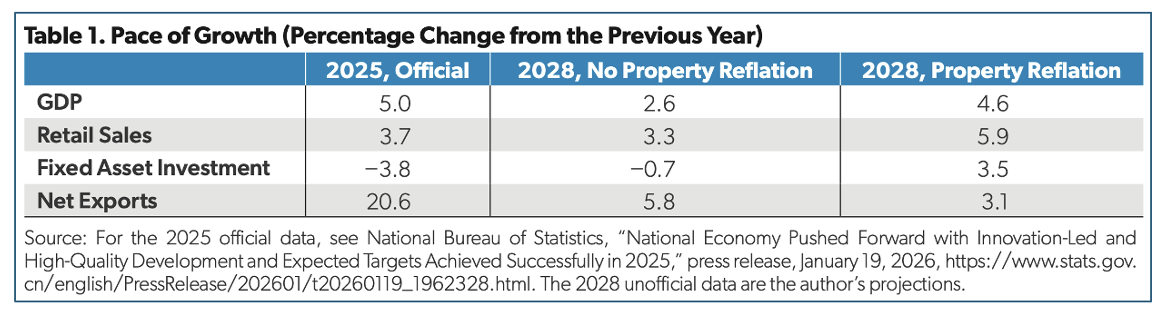
The Chinese economy has been generally weaker than acknowledged in the 2020s. The most frequently discussed solutions, such as stimulating consumption, cannot generate a sizable, sustained impact for more than a year or so. Reinflating the property bubble would do so. It cannot be done immediately or easily but could for a multiyear period bring clearly faster economic growth without wrenching dislocation or automatically adding to the debt burden. In the longer term, even successful property reflation will not matter much. Unwillingness to reform, debt accumulation, and especially demography guarantee a China that essentially stops growing by the late 2030s.
China’s Cheap Money Is Shaking $9.5 Trillion Global Loan Market Bloomberg
Chinese banks, flush with low-cost funds, are reshaping parts of the global loan market, underscoring how deflationary pressures in the world’s second-largest economy are increasingly influencing competition with international lenders. Much like US and European manufacturers who have long complained about being undercut by cheaper Chinese rivals, bankers at global institutions now say they’re facing the financial equivalent: being priced out of some of Asia’s most sought-after borrowers as Chinese lenders extend cheaper credit across borders. Enabled by Beijing’s monetary easing to counter slowing growth, Chinese banks are expanding overseas lending amid weakening domestic credit demand. That edge may prove even more significant as the Iran crisis threatens to upend global energy markets, raising the likelihood that major central banks will hold off easing interest rates amid mounting uncertainty.
Growing US – Cuban Tensions
The Coming Showdown Over Cuba Rut Diamint & Laura Tedesco/Foreign Affairs
President Trump stated this past week that “Cuba is going to fall pretty soon. They want to make a deal badly.” Even before the current crisis, the Cuban people had long suffered under a cruel dictatorship, ruinous economic policies and mismanagement, and a six-decade U.S. trade embargo. In recent years, the island has experienced gasoline and medicine shortages, routine power outages, food cost increases, and mosquito-transmitted-disease outbreaks that have overwhelmed the public health system. Havana has little room to maneuver. Yet the chances that Trump will launch a Maduro-style military mission in Cuba remain low. After his Venezuela operation, undertaking a similar ouster would no longer have the advantage of surprise, and Cuba’s security forces are generally believed to be more loyal to their regime than Venezuela’s were to theirs.
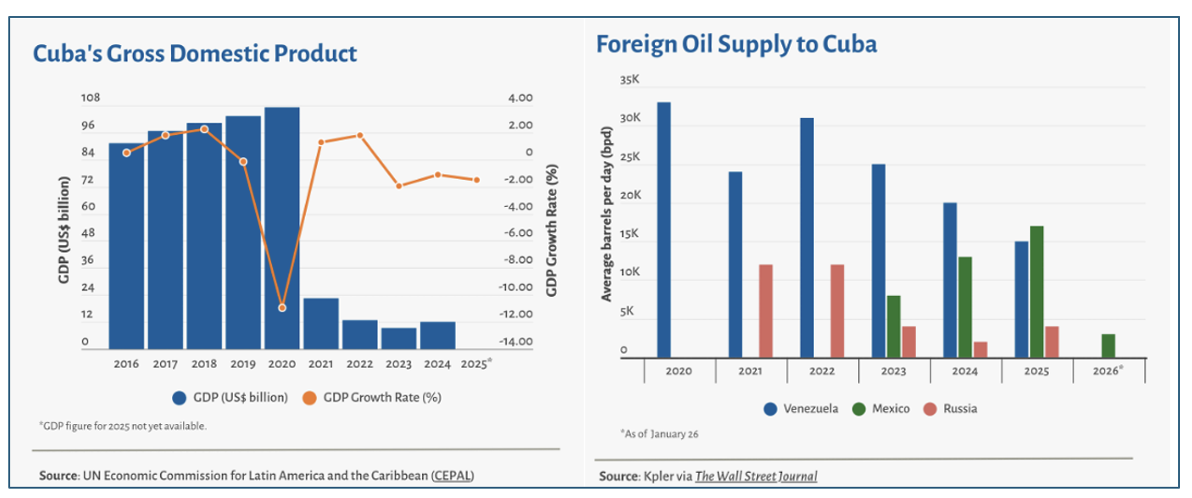
Seven Charts on Cuba’s Economic Woes Americas Society/Council of the Americas
The Caribbean island is undergoing its worst economic period in decades while facing rising U.S. pressure. These seven charts show how the island country is facing an extraordinary economic and demographic collapse.
Cuba’s Military: The Institution Washington Cannot Ignore Americas Quarterly
For more than six decades, U.S. policy has failed to dislodge the Cuban regime, even when it appeared economically and politically vulnerable. As Washington again intensifies pressure on the island, policymakers must confront a central reality often overlooked in external debates: the decisive role of Cuba’s Revolutionary Armed Forces (FAR). More than a traditional military institution, the FAR functions as a political, economic, and administrative pillar of the state. It mediates regime continuity, oversees strategic sectors of the economy, and would shape the parameters of any eventual transition. In practice, the keys to both change and stability in Cuba are likely to rest not with opposition movements or external actors, but with key members of the FAR.
America’s Mood vs. Historic Economic Growth
Poverty and Dependency in the United States, 1939–2023 Richard V. Burkhauser & Kevin Corinth/National Bureau of Economic Research
Abstract: We compare trends in absolute poverty before (1939–1963) and after (1963–2023) the War on Poverty was declared. Our primary methodological contribution is to create a post-tax post-transfer income measure using the 1940, 1950 and 1960 Decennial Censuses through imputations of taxes and transfers as well as certain forms of market income including perquisites (Collins and Wanamaker 2022), consistent with the full income measures developed by Burkhauser et al. (2024) for subsequent years. From 1939–1963, poverty fell by 29 percentage points, with even larger declines for Black people and all children. While absolute poverty continued to fall following the War on Poverty’s declaration, the pace was no faster, even when evaluating the trends relative to a consistent initial poverty rate. Furthermore, the pre-1964 decline in poverty among working age adults and children was achieved almost completely through increases in market income, during which time only 2–3 percent of working age adults were dependent on the government for at least half of their income, compared to dependency rates of 7–15 percent from 1972–2023. In contrast to progress on absolute poverty, reductions in relative poverty were more modest from 1939–1963 and even less so since then.
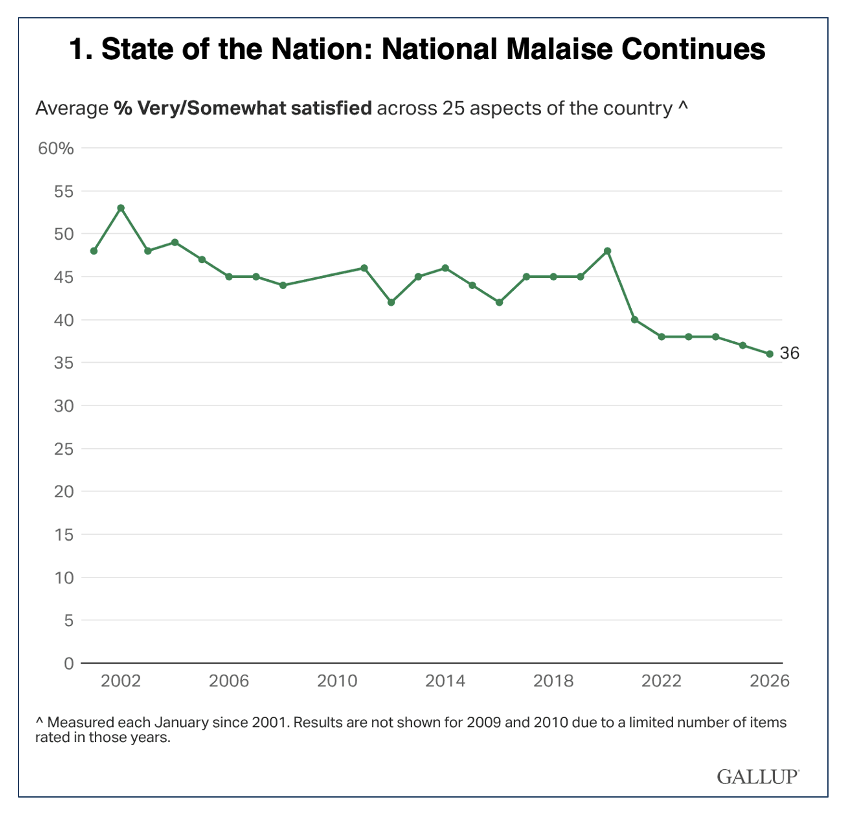
State of the Nation: National Malaise Continues Gallup
Each January, as part of its Mood of the Nation poll, Gallup asks Americans whether they are satisfied or dissatisfied with a battery of national conditions, offering a public "state of the union" measured ahead of the president's address to Congress. In January 2026, an average of 36% said they were very or somewhat satisfied across 25 aspects of the country, the numerically lowest reading in the poll's history dating back to 2001. The Trend: For two decades, average satisfaction with these national conditions stayed within a narrow band, fluctuating between 42% and 49%. It fell to 40% in January 2021 and has declined further since.
The Great Happiness Compression Home Economics
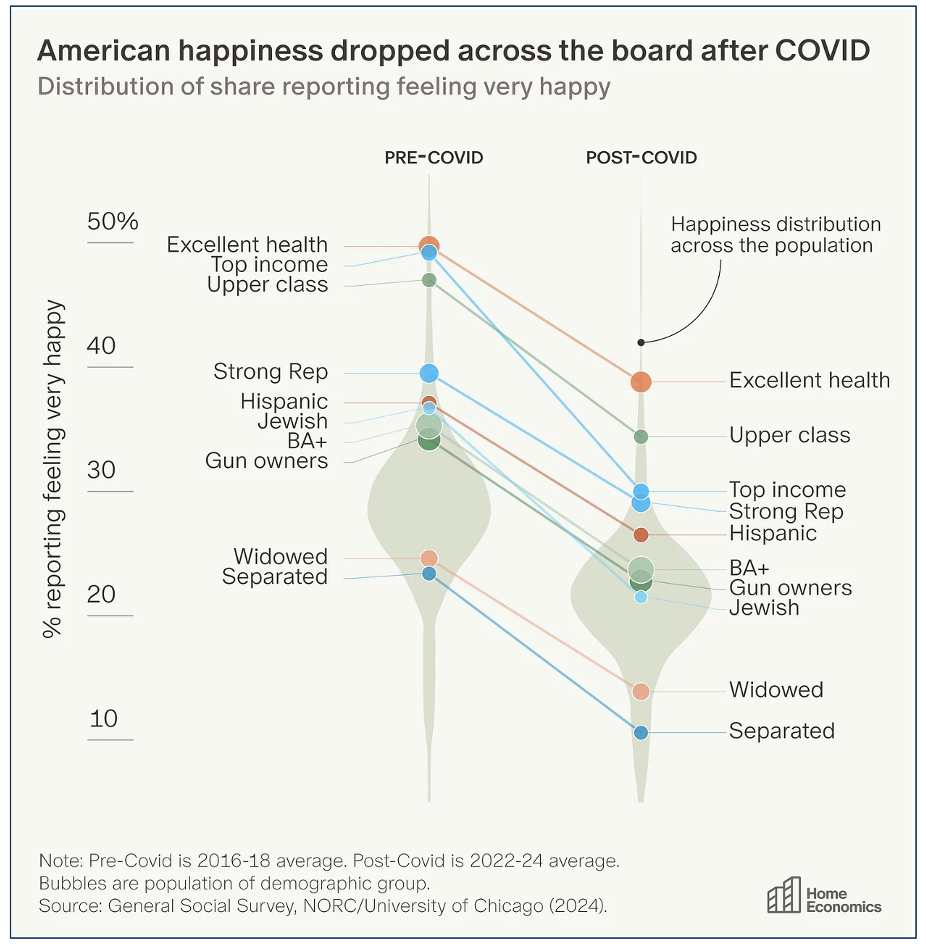
American happiness has fallen off a cliff. The General Social Survey has tracked this since 1972. Their data shows the share of Americans reporting they are "very happy" dropped from 29% before the pandemic to 22% in the most recent reading—the largest decline over any comparable span in the survey's 52-year history. The chart shows the shift in the "very happy" distribution across the population, along with the ten demographic groups that experienced the biggest happiness declines. The groups that lost the most happiness are the ones that had the most to begin with. The bottom barely budged. The groups that held up best share one trait: social connection. People who see friends often dropped just 4 points, compared to a 9-point drop among those who see friends rarely. Happiness for those who socialize with neighbors dropped less than for those who rarely do.