Weekend Reads
Mexico – US Relations Get More Tense, Russia Hitting a Critical Inflection Point Internally, How American First Investment Pledges Are Structured – But Will It Work? , And the Impact of Inflation on Fertility
January 30 - February 1, 2026
Below are several reports and articles we read this past week that we found particularly interesting. Hopefully, you will find them of interest and useful as well. Have a great weekend.
Americas
‘What the hell do we do with this issue’: Mexico confronts Trump’s Cuba pressure Politico
President Donald Trump’s increasingly overt attempts to bring down the Cuban government are forcing Mexican President Claudia Sheinbaum into a delicate diplomatic dance. Mexico is the U.S.’s largest trading partner. It is also the primary supplier of oil to Cuba since the U.S. seized control of Venezuela’s crude. Now, Sheinbaum must manage her relationship with a mercurial Trump, who has at times both praised her leadership and threatened to send the U.S. military into her country to combat drug trafficking — all while appeasing her left-wing party Morena, factions of which have historically aligned themselves with Cuba’s communist regime.
Washington’s Sharpening Stance on Mexico Americas Quarterly
There is a deep shift underway in Washington—one that redefines Mexican organized crime not primarily as a law-enforcement problem or a bilateral cooperation challenge, but as a direct national security threat to the U.S. That redefinition is already reshaping U.S. policy tools, institutions, and expectations vis-à-vis Mexico, with potentially profound consequences for the bilateral relationship.
Can anything halt Latin America’s lurch to the right? Financial Times
“It’s because of the expansion of the major criminal markets in the region,” says Council on Foreign Relations Fellow Will Freeman. “The huge increase in the size of the cocaine trade, the boom in illegal gold mining, for a time, the wave of human smuggling, and the way that has seeded a lot of new gangs and criminal outfits in different parts of the region that didn’t previously have to deal with this.” The dramatic capture of Venezuela’s authoritarian president, Nicolás Maduro, by US commandos in the early hours of January 3 has, if anything, reinforced the swing to the right in most of the region, pollsters say.
Is Russia at a Critical Inflection Point?
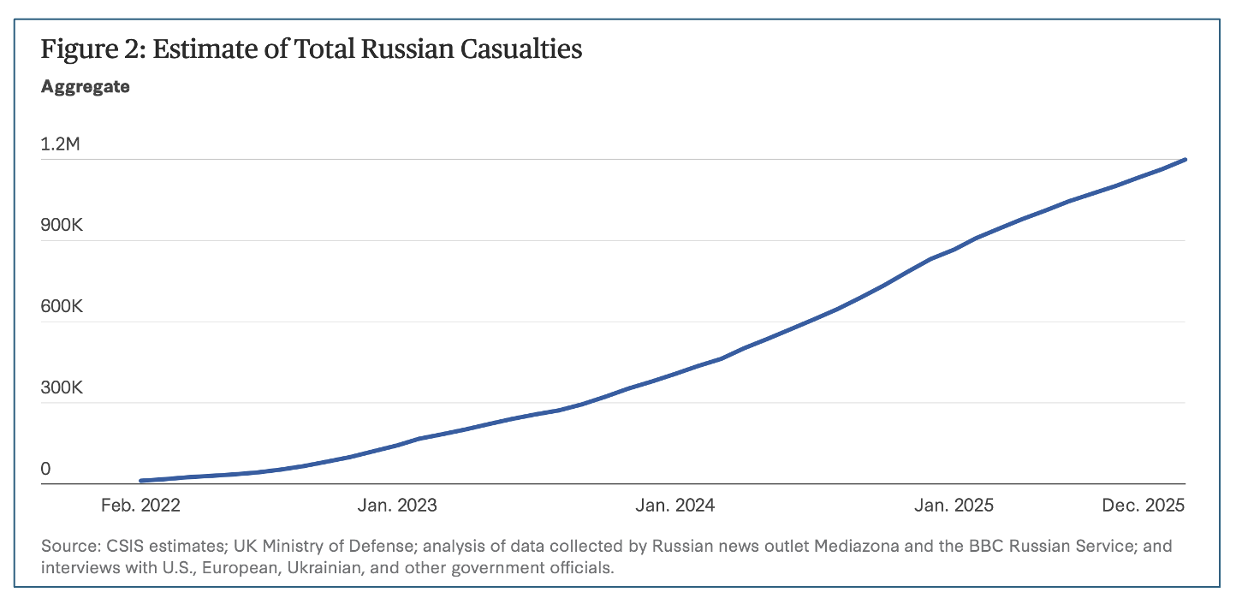
Russia’s Grinding War in Ukraine Center for Strategic and International Studies
Despite claims of battlefield momentum in Ukraine, the data show that Russia is paying an extraordinary price for minimal gains and is in decline as a major power. Since February 2022, Russian forces have suffered nearly 1.2 million casualties, more losses than any major power in any war since World War II. At current rates, combined Russian and Ukrainian casualties could reach 2 million by the spring of 2026. After seizing the initiative in 2024, Russian forces have advanced at an average rate of 15-70 meters per day in their most prominent offensives, slower than almost any major offensive campaign in the last century. Meanwhile, Russia’s war economy is under mounting strain, with manufacturing declining, growth slowing to 0.6 percent in 2025, and no globally competitive technology firms to drive long-term productivity.
Russian Economy’s “Unholy Trinity”: Recession, Inflation, Budgetary Crisis Free Russia
The Russian economic situation has reached a breaking point in 2026, facing the “unholy trinity” of challenges:
The ongoing budget crisis, which is set to exacerbate in 2026 due to a shortfall of oil and gas export revenues as well as under-collection of domestic taxes due to cooling of the Russian economy;
High inflation, which has not been brought under control - contrary to widespread public misconception, and which still requires maintaining prohibitively high interest rates thus diminishing Russians’ real incomes;
A looming recession, which seems inevitable given the lack of sources of potential major economic revival (no fiscal stimulus, an inability to access international investment and financial markets, expensive credit, shrinking corporate profits, etc.).
Geoeconomics
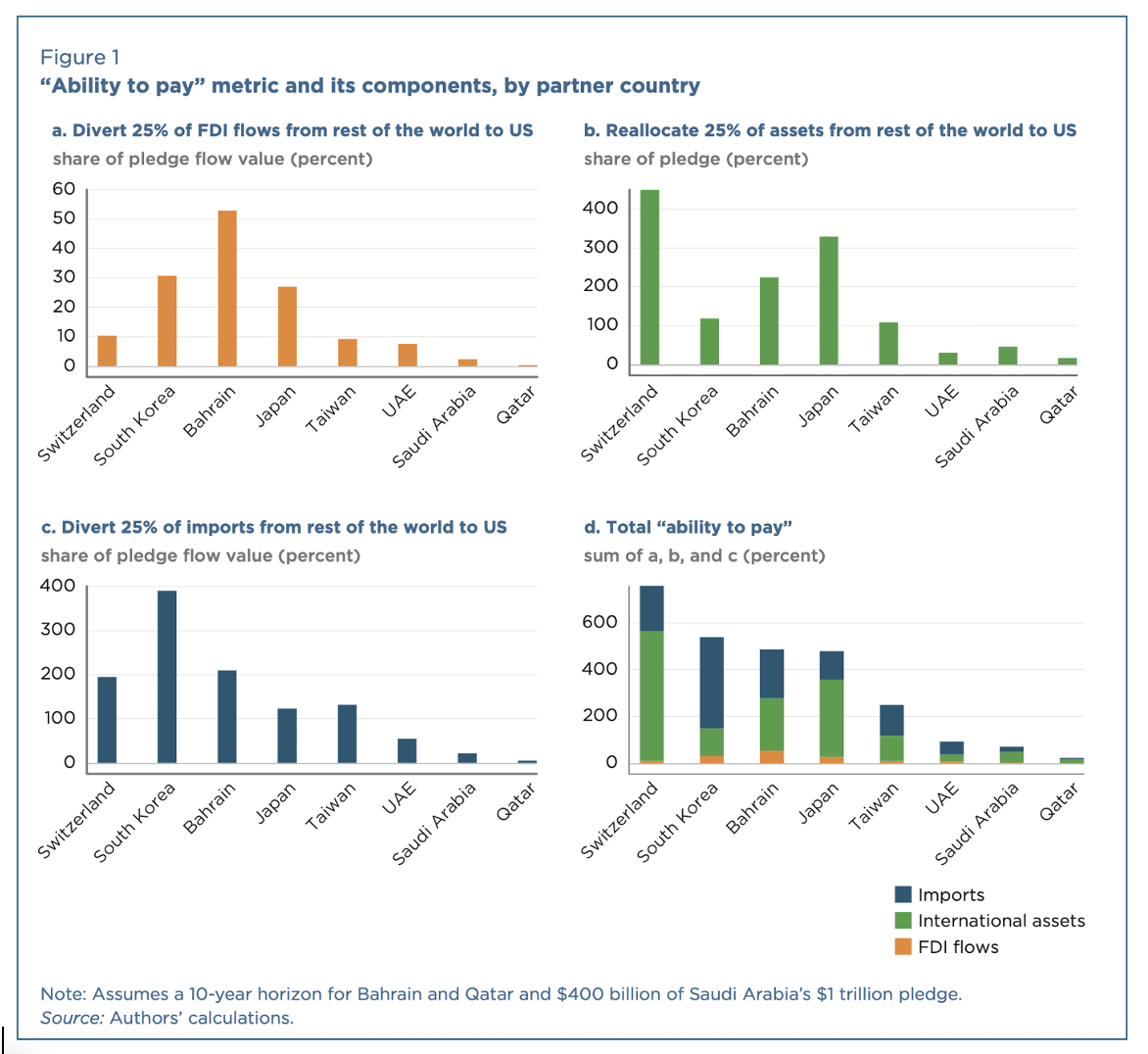
The America First investment pledges: How are they structured and are they realistic? The Peterson Institute for International Economics
In pursuit of President Donald J. Trump's "America First" agenda, the administration has pressured allies and partners to invest in US industrial and infrastructure projects. The White House has announced commitments by the European Union, Japan, South Korea, Taiwan, several Gulf Cooperation Council countries, and others, to import specific amounts of goods and services from the United States and to make sizable investments on US soil. These agreements resulted from a more coercive US foreign policy than in the past. Because the administration is helping select the targets of foreign investment, it is embarking on a major expansion of US industrial policy—one paid for by allied countries. This Policy Brief shows that much about investment pledges, worth more than $5 trillion, remains unclear or aspirational.
Making Industrial Strategy Great Again Foreign Affairs
The author argues that the Trump administration has embraced industrial policy in all the wrong ways. Instead of organizing policy around missions—explicit public goals that define the problem to be solved and the outcomes to be delivered—and then aligning the state’s tools to get there, it has treated industrial policy as a set of sector deals to be cut and announced. It has stripped away conditions on government support for private industry that could ensure the socialization of rewards. The government has taken a ten percent stake in the semiconductor manufacturer Intel for $5.7 billion in CHIPS Act funding; a 15 percent stake in the rare-earth mining and processing company MP Materials for a $400 million investment; a five percent stake in Lithium Americas, the company developing the Thacker Pass lithium project in Nevada, through loan restructuring; and a “golden share” in U.S. Steel, granting the government permanent veto power over headquarters relocation and production offshoring. But it is using these unprecedented equity stakes not to steer strategy or secure public value but to extract value retroactively. Industrial policy will fail, economically and politically, unless it is organized around clear missions to create public value. When the state socializes risks through public funding, the public must share in the rewards.
Economic Statecraft Is Back. Is America Ready? War on the Rocks
America still has enormous economic leverage. What it lacks is a plan. A new War on the Rocks series, launched with the Potomac Institute for Policy Studies, explores how economic statecraft should be organized, led, and integrated into defense planning.
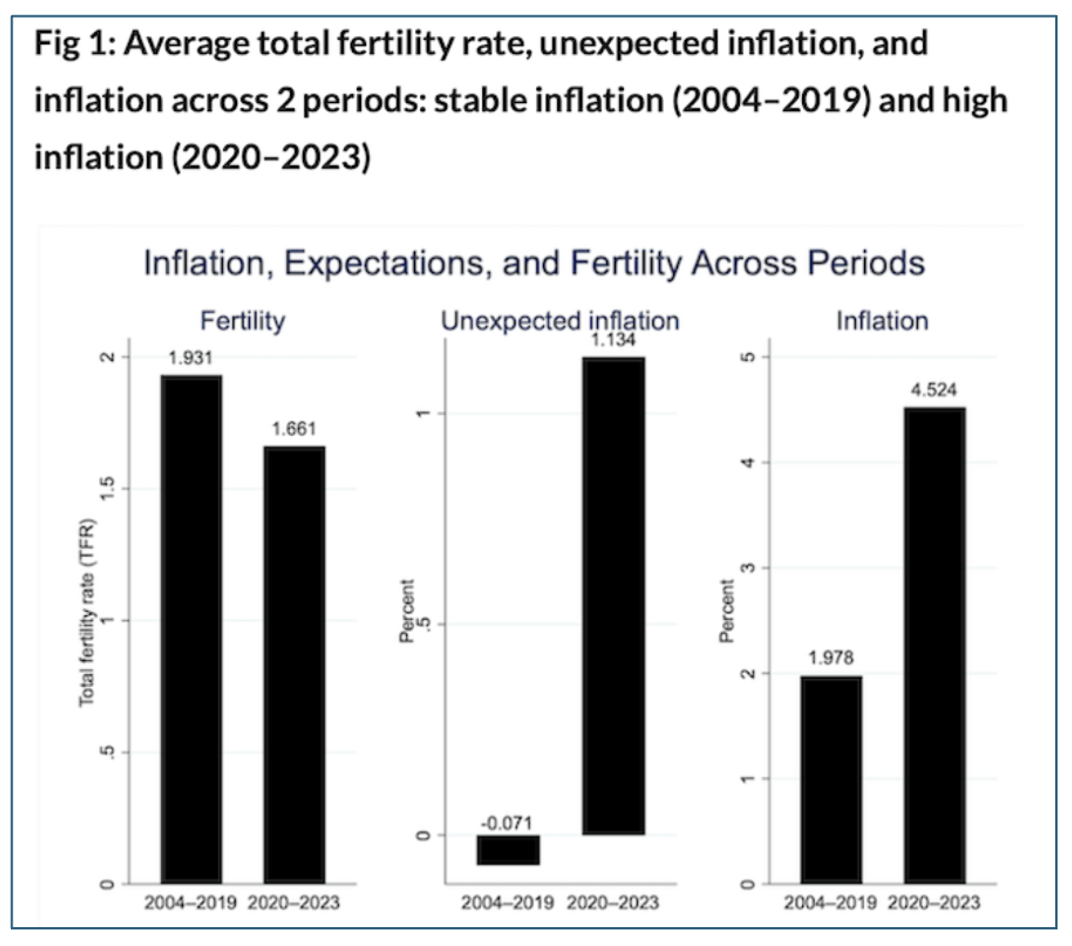
Inflation and Fertility in the United States Institute for Family Studies
Over the past several years, American households have experienced one of the sharpest increases in the cost of living in decades. Rising prices for housing, childcare, healthcare, and education have coincided with heightened economic uncertainty following the COVID-19 pandemic. At the same time, U.S. fertility rates have continued their long-run decline, prompting renewed debate about whether economic pressures are reshaping family formation decisions. While discussions often focus on cultural change or shifting preferences, the affordability of raising children in an era of elevated and unpredictable prices may be an underappreciated part of the story.